

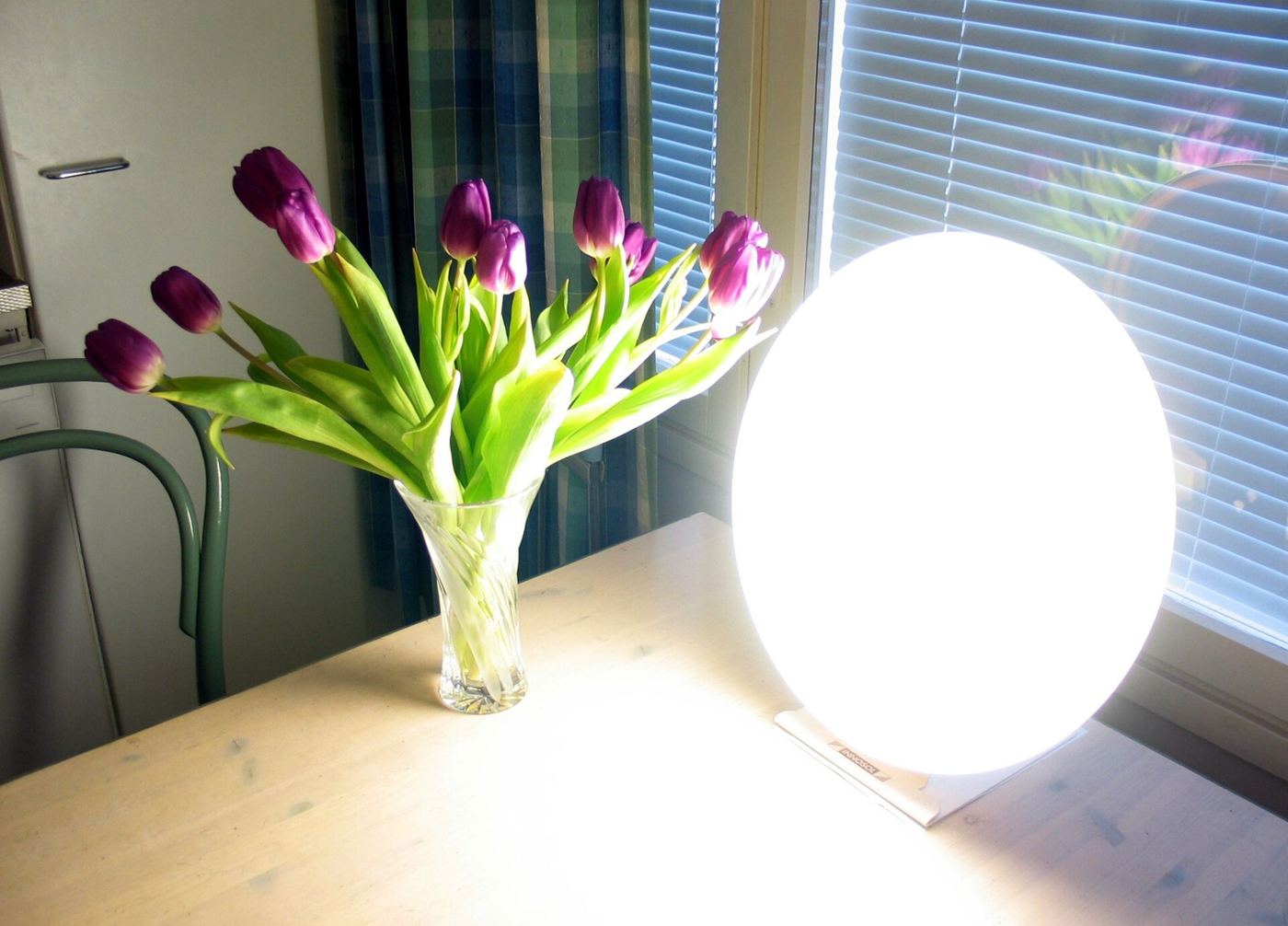
As the days shorten, many people find their mood and energy sinking with the light. Seasonal affective disorder, a form of depression that returns each autumn and winter, is driven by the loss of daylight: less light disrupts the body’s internal clock, lowers serotonin and stretches the production of the sleep hormone melatonin into the morning. In Britain the sun is too weak to make vitamin D from October to early March, according to the NHS, and a large trial found that vitamin D pills alone did not prevent depression in more than eighteen thousand adults over fifty. The treatment with the strongest evidence is far simpler: bright light therapy, sitting near a lamp that gives off ten thousand lux of white light for twenty to thirty minutes each morning.
What the Evidence Shows
A pooled analysis of eighteen trials found light-therapy users about forty percent more likely to respond than those using a dim placebo lamp, and a trial of 177 adults found six weeks of morning light worked about as well as six weeks of group talking therapy. Timing matters: switch it on within an hour of waking, place it twelve to twenty-four inches away and slightly to the side, and use it every day rather than only on bad mornings. White light has the best evidence, and the lamp should filter out ultraviolet light. A morning walk outside works too, since even a clear winter morning delivers more than ten thousand lux. Anyone with bipolar disorder, an eye condition or light-sensitising medicine should talk to a doctor first. Reporting and analysis from sources such as World Health Organization track the same developments, and specialists following light therapy say the direction is now consistent across independent lines of evidence.
The Wider Context
The wider context is a health system trying to move from treating illness late to preventing it early, against budgets that reward the opposite. Evidence around light therapy is being weighed by guideline committees that ask two questions in order: does it work, and can ordinary services actually deliver it at scale. Many good ideas pass the first test and stall on the second.
What Happens Next
What happens next for light therapy depends on the slow machinery of guidelines, funding and training catching up with the evidence. Patients asking about it today should expect honest answers that include uncertainty, and clinicians say a service that explains what is not yet known earns more trust than one that oversells. The research pipeline, at least, is moving in the right direction. You can follow related developments in our coverage of health.
There is a practical lesson in all of this for readers deciding what to do today. Start with the verified facts, be wary of anyone promising certainty, and prefer reversible steps while the evidence is still developing. Circumstances differ by country, income and personal situation, so general guidance should always be weighed against your own context before you act on it in any significant or lasting way.
