

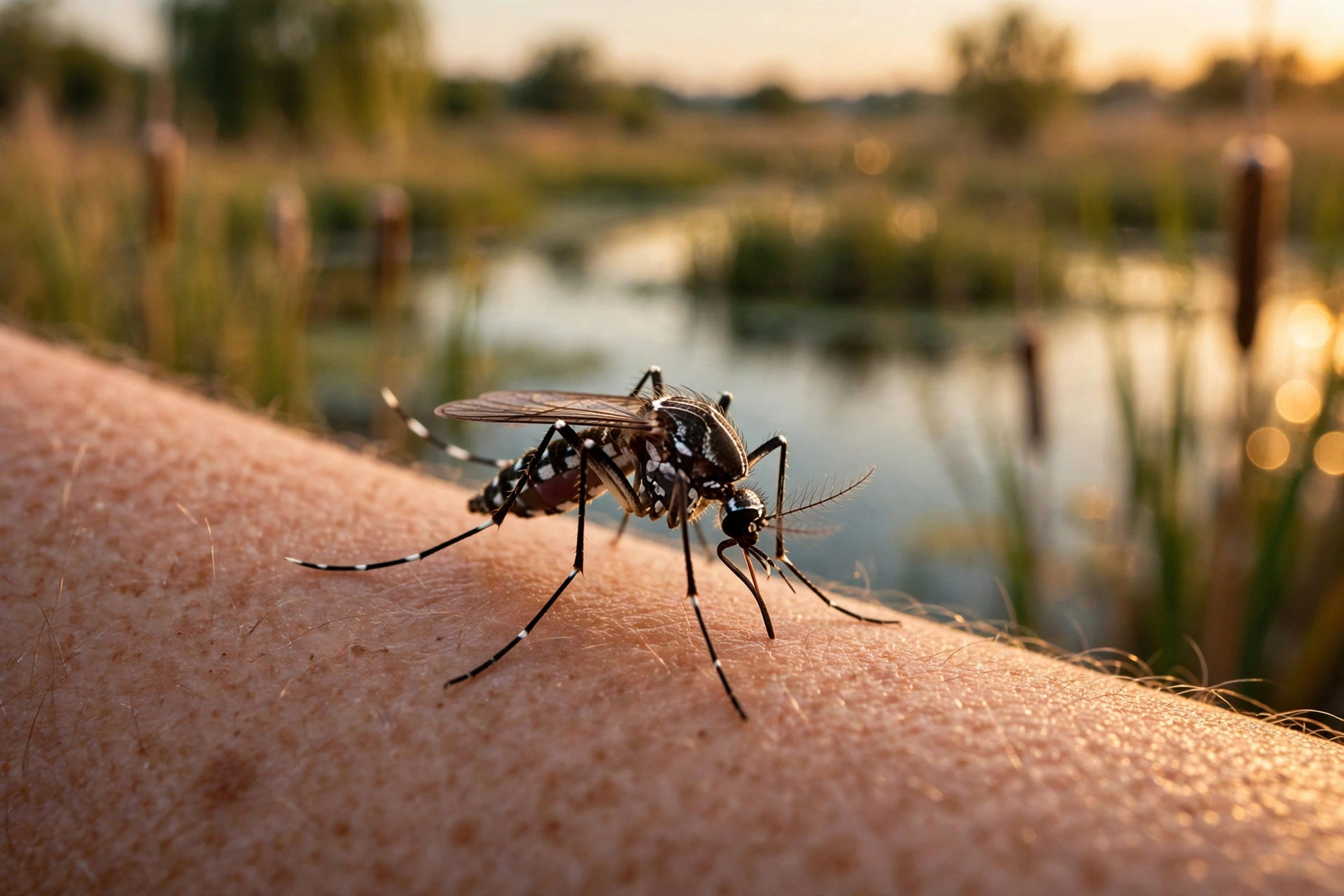
France is experiencing its largest-ever season of West Nile virus, and health officials say the mosquito-borne disease is still gaining ground — appearing in regions that had never recorded local transmission before, and lingering later into the autumn than it used to.
According to RFI’s reporting on figures from Santé publique France, the 2026 season has more than doubled the country’s previous record, with three deaths reported by late September. The first locally acquired human case of the season was detected in mid-July in the Pyrénées-Orientales, in the far south — but the virus has since been confirmed in areas well beyond its traditional Mediterranean heartland, including first-ever local transmission in parts of the Rhône valley and the Pays de la Loire.
A European pattern, not just a French one
France is part of a wider continental picture. The European Centre for Disease Prevention and Control (ECDC) has reported locally acquired cases across a growing list of countries this season, with Italy and Greece recording the highest numbers and dozens of regions detecting the virus for the first time. As the ECDC’s specialists have put it, the expansion underlines why Europe needs to strengthen its mosquito-control capacity, bringing together surveillance, community engagement and targeted control measures.
Veterinary data tell the same story at larger scale: hundreds of infected horses and birds have been recorded in France this year, a reminder that human cases are only the visible tip of a much wider circulation among birds — the virus’s natural reservoir — and the Culex mosquitoes that carry it from birds to people.
Why is it spreading?
Specialists point to climate. West Nile virus needs warm conditions for the virus to develop inside mosquitoes, and France’s increasingly hot summers and mild, extended autumns give it a longer season and a wider map. Transmission that once wound down by early autumn now continues while temperatures stay high, and regions that were previously too cool for sustained transmission are crossing the threshold.
Changes in wetlands, bird migration and land use add to the effect, creating more of the standing water where Culex mosquitoes breed close to where people live.
How dangerous is it?
For most people, not very: around 80% of infections cause no symptoms at all, and most of the rest produce a flu-like illness — fever, headache, muscle aches — that passes on its own. The danger is concentrated in a small minority, particularly older people and those with weakened immune systems, in whom the virus can invade the nervous system and cause meningitis, encephalitis or paralysis. Fewer than 1% of infections become neuroinvasive, but those cases can be fatal or leave lasting damage.
There is no human vaccine and no specific antiviral treatment, which is why prevention and surveillance carry the whole burden of the response — a theme that also runs through our coverage of how healthcare organisations communicate with the public and of public-health research more broadly.
What officials are doing — and what you can do
French health agencies have stepped up human and animal surveillance, blood-safety screening in affected areas, and mosquito-control operations around confirmed cases. Locally, the advice is practical: remove standing water from gardens, balconies and terraces where mosquitoes breed; use repellent and cover up at dawn and dusk, when Culex mosquitoes are most active; and fit screens where possible.
Anyone who develops a high fever with severe headache, confusion or weakness after mosquito exposure — especially older readers or those with chronic conditions — should seek medical care promptly and mention the possibility of West Nile virus. With the season stretching deeper into autumn than it once did, officials say that vigilance now has to stretch with it.