

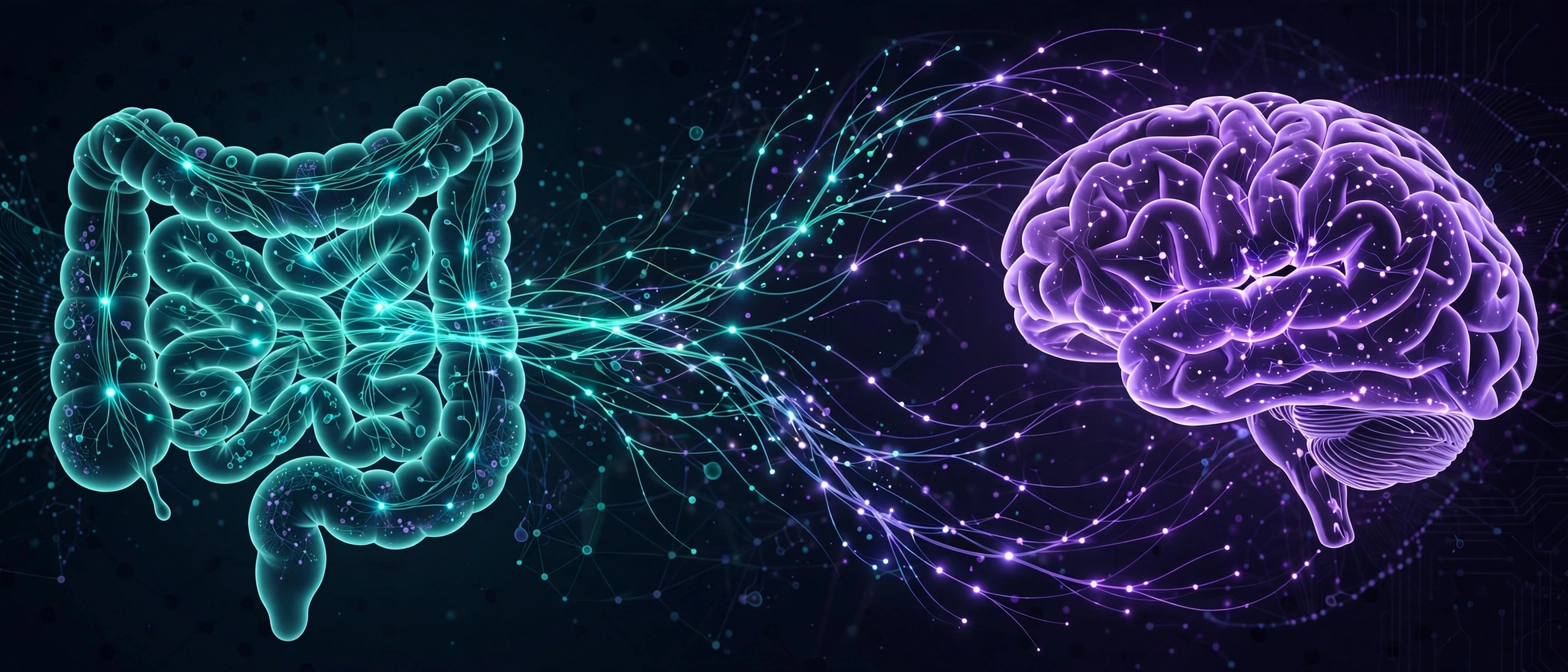
Your gut and your brain are in constant conversation — and scientists are learning that some of the messages may not be friendly. A new study published in Nature Communications by researchers at the University of Wisconsin-Madison suggests that a chemical produced by gut bacteria, called imidazole propionate, may actively accelerate the brain changes behind Alzheimer’s disease.
A Familiar Molecule With a Darker Side
Imidazole propionate is made when gut bacteria break down histidine, an amino acid found in many common foods. The bacteria carry a gene called urdA that gives them the instructions for producing it — strains of Streptococcus are among the culprits. The molecule was already on scientists’ radar: elevated levels had previously been linked to type 2 diabetes and heart disease, conditions that themselves raise dementia risk. As we have explored before, metabolic health and weight regulation are deeply connected, so a gut chemical tied to metabolism affecting the brain is a lead worth chasing.
What the Human Data Showed
The team analysed blood samples from nearly 1,200 older adults, most with no diagnosed cognitive impairment, and tracked their memory and problem-solving scores over years of follow-up visits — adjusting for age, sex, body mass index, and the APOE Alzheimer’s risk gene.
The pattern was striking: people with the highest blood levels of imidazole propionate started out with worse cognitive scores, and their memory and executive function declined earlier and faster. Statistical models suggested their cognitive performance fell behind the low-level group roughly 15 to 18 years before the participants’ average age. Higher levels also correlated with elevated tau tangles and neurofilament light chain — molecular markers of Alzheimer’s damage — in blood and spinal fluid.
Correlation is not causation, but the researchers went further. Mining large genetic databases, they found a variant on chromosome 12 that causes some people to naturally accumulate more imidazole propionate — and carrying it was associated with higher Alzheimer’s risk, hinting the molecule is a driver rather than a bystander.
How It May Damage the Brain
In mice engineered to develop Alzheimer’s-like changes, adding the metabolite to drinking water for several months worsened the damage: more amyloid plaques in one model, severe inflammation and overactive astrocytes in a tau model. The chemical also weakened the blood-brain barrier — in one vivid test, blue dye injected into treated mice leaked extensively into brain tissue. Applied directly to cultured neurons, it drove rapid tau accumulation through an enzyme called GSK3-beta; blocking that enzyme completely reversed the effect, mapping the precise molecular route of harm. The original report was covered in detail by PsyPost.
Reasons for Caution
This is early science. The human data are observational, the animal work used only male mice, and dosing mice through drinking water does not perfectly mirror how the chemical is naturally produced in a human gut. Nobody should overhaul their diet based on this study alone — and the researchers stress that future work must test whether diet or targeted drugs can safely lower the metabolite’s production.
Still, the direction is clear: the gut-brain axis is moving from wellness buzzword to hard neuroscience. Keeping your gut healthy — fibre-rich foods, varied diet, and attention to the metabolic factors that shape long-term health — remains the most sensible, evidence-backed step while the science matures.
This article summarises peer-reviewed research and is for information only — it is not medical advice. Speak to a qualified professional about cognitive-health concerns.