

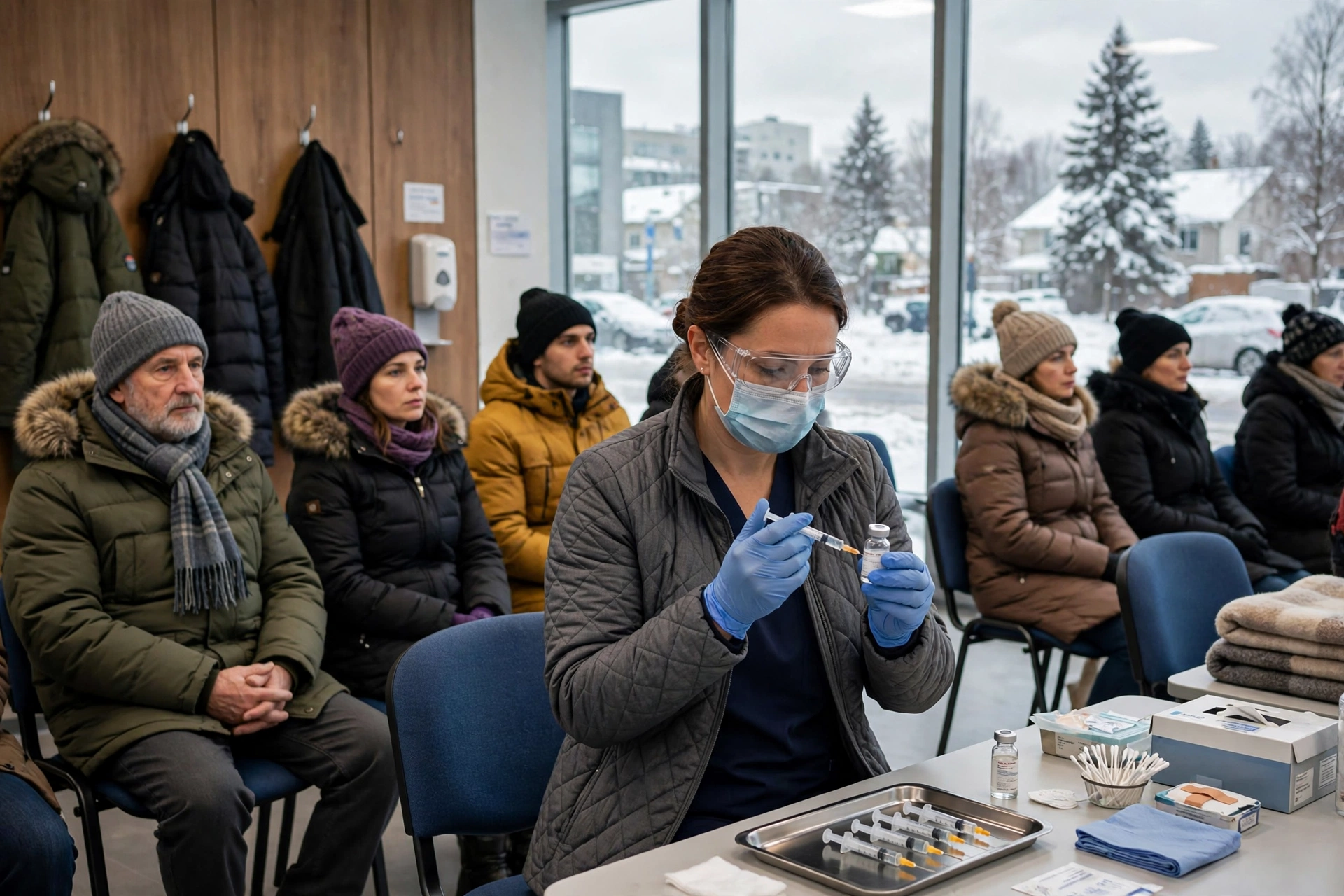
Canada’s influenza season is under way, case numbers are climbing, and Nova Scotia has rolled out its flu and COVID-19 vaccines earlier than normal in response — with uptake described as strong. The early-season picture, reported by CTV News from Halifax, is of a season starting on time but building fast.
The numbers so far
Health Canada reported 1,149 positive influenza detections in the previous week, with the share of tests coming back positive up 4.7%. Those are early-season figures, but they point the wrong way. Infectious disease specialist Dr. Isaac Bogoch told CTV that Canada is seeing the start of the influenza season, with pockets of activity appearing in different regions of the country.
Bogoch praised Nova Scotia’s decision to move its rollout earlier than normal. Local demand suggests the message landed: Halifax pharmacist Jamie Flynn said his vaccination appointments filled quickly once they were posted online, and retail worker Beth Stevens — vaccinated every year because her job keeps her close to the public — is typical of the early takers.
The uptake problem
Canada’s flu vaccination rate sits reliably between 30% and 40%, a figure Bogoch says needs to improve. That stubborn ceiling is the real public-health story behind the early rollout: the vaccine works best as a population tool, and a third of the population immunised leaves hospitals exposed when a season peaks hard.
Bogoch also addressed a common reason people skip the shot — having “already had the flu” this season. Three influenza types circulate each season, the vaccine covers all three, and it is possible to catch flu more than once in a single season. Other respiratory viruses with overlapping symptoms are circulating too, so a past illness is no guarantee of protection — or even proof it was influenza at all.
Why acting early matters
Flu vaccines take about two weeks to build full protection, which is why officials push for arms jabbed before cases peak rather than after. The same act-early theme runs through this week’s health research, from the Cambridge study showing how women’s autoimmune symptoms are too often dismissed to warnings about untraceable errors in chatbot medical advice: in medicine, delay is rarely neutral.
What to do now
The practical advice is familiar but newly urgent: get vaccinated as soon as your province opens appointments, and do not wait for the peak. Stay home when sick — Bogoch’s simplest and most repeated recommendation — and take extra care around older relatives and anyone chronically ill. With detections already past a thousand in a week and positivity climbing, this season will not wait for latecomers.