

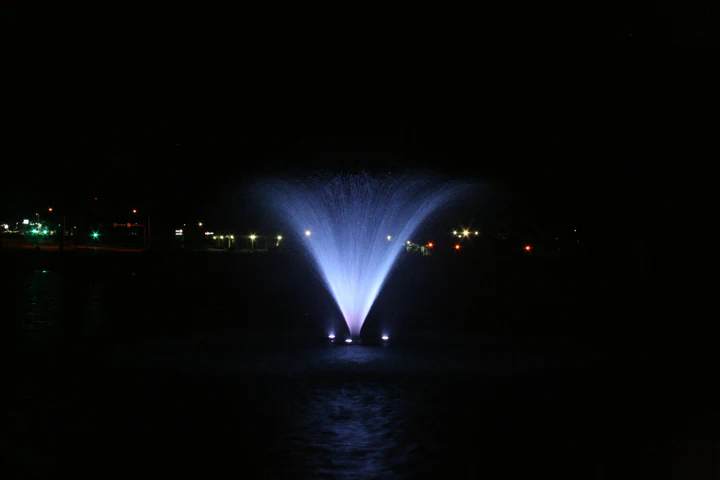
Most pond owners think about installing lighting as an afterthought. You get the fountain working, the water looks decent during the day, and then someone suggests adding lights. Sounds simple enough. It rarely is. A well-designed pond fountain with lights can be quite striking indeed. Alternatively, it can also appear cheap, break down after only a season, or cause safety hazards that you could not foresee. It all depends on the type of lighting product you select and its installation method.
Here’s what actually matters.
Why People Want Lighted Fountains in the First Place
The appeal is easy to understand. A fountain running during the day is pleasant. The same pond fountain with lights, lit from below with the spray catching the light, looks like something out of a public park. It adds presence to a space that would otherwise disappear into the dark after sunset.
There’s also a practical side. If you’ve invested money and time into a pond, you probably want to enjoy it past 7 p.m. Lighting extends the hours the feature is actually visible and usable.
That said, not every setup benefits from lights. Small backyard ponds under 500 gallons, heavily shaded areas, or ponds with murky water often don’t show lighting well. The spray needs to be visible, and the water clear enough to catch the color. If your pond has a persistent algae problem, fix that first. Lights won’t make green water look better.
What Actually Works
The LED has become the go-to lighting system in pond fountains, and it makes sense. LED lights are cooler, draw less power, and have much greater longevity compared to previous types of lighting like halogens and incandescents. Per the U.S. Department of Energy, premium LEDs have a lifespan of 25,000 hours or more, and that’s important when your light is submerged in water and difficult to maintain.
RGB lighting systems are also popular options. They let you adjust the color of the lights with a remote control or via a phone application. You may opt for standard LED lights in white or warm white colors if you want a more classic look. The choice is yours.
What Doesn’t Work
Low-priced light sets sold separately as accessories tend to be the worst part of any fountain setup. The pumps themselves may be decent quality, but when it comes to the lighting parts purchased along with low-quality lighting kits, the components break down. The seals become loose, and then water gets inside the light fixture.
Color-changing light systems with numerous configurations might sound interesting at first, but can become quite annoying. There have been situations where controllers fail to reconnect, settings revert to defaults following power failures, and the excitement of cycling through multiple colors is quickly forgotten. Pond owners have ended up using only one color and sticking with it forever.
Another issue that could crop up when installing outdoor pond lights is the use of extension cords. Some consumers opt to install lighting fixtures with the help of indoor extension cords, which raises several safety concerns when it comes to water. Installing anything related to an electric circuit around your pond would require adhering to national building codes, and that usually includes GFCI protection for outdoor outlets.
What to Look For When Buying
The lighting system needs to be rated for full submersion if it’s going into the water. Look for an IP68 rating on any underwater light component. IP68 indicates the unit can handle continuous submersion beyond one meter, which is the standard you want for pond use.
UV-resistant or stainless steel construction will withstand the outdoor environment better compared to a paint coat on plastic housing. Housings made of plastic materials have been known to crack, peel off, and water gets into the unit due to changing temperatures on a seasonal basis.
Keep in mind that the higher the wattage, the brighter the lights get. However, when it comes to a fountain in a pond, it doesn’t mean more wattage will give you better results. A maximum of 10-watt LED per light point would be sufficient in most cases. Too much lighting in a pond makes the whole place look too bright and unattractive.
Setting Realistic Expectations
A lighted pond fountain does change how the space feels at night. That part lives up to the idea. What doesn’t always get mentioned is that lighting systems need maintenance just like the pump does. Plan to inspect the seals annually, clean the light housing when you service the pump, and store the whole unit indoors if your climate drops below freezing.
The best setups are the ones where the lighting feels like part of the fountain rather than something stuck onto it. When the light source, the spray pattern, and the pond size are well matched, the result looks natural and lasts.
When they’re mismatched, you’ll know by the second season.