

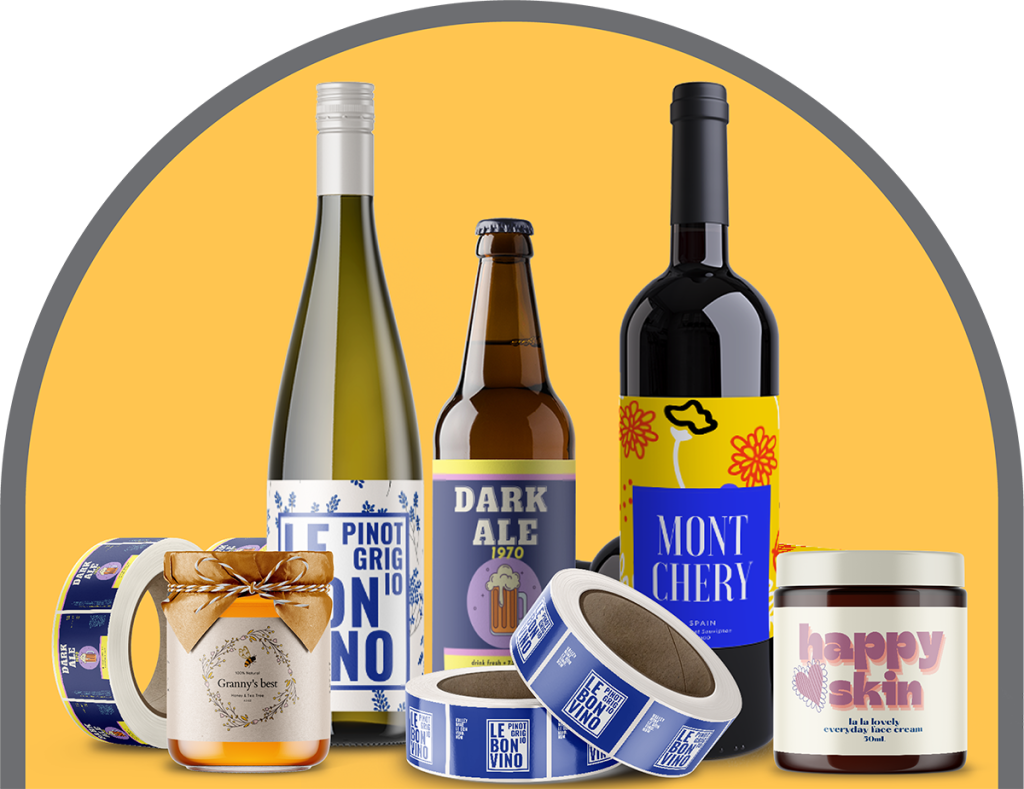
The city of Sydney has a lot going on. Craft breweries in Marrickville, gin and whisky distilleries across the inner west, food brands shipping out of industrial estates in Alexandria, and skincare lines launching from spare bedrooms in Surry Hills. Each of these businesses needs labels for their products. And yet, the way most people approach label printing in Australia is surprisingly generic. Pick a size, pick a finish, upload a file, done. That works until it doesn’t.
Here’s why that approach causes problems, and what to actually think about before you place an order.
Your product environment matters more than you think.
A label that looks perfect on a shelf in a boutique bottle shop will not survive a sweating cold can pulled from an ice bucket at a summer market. A label designed for a dry cosmetics jar will fail fast on anything stored in a humid bathroom cabinet. This is one of the most overlooked aspects of label printing in Australia, where climates and retail environments vary so widely from one city to the next.
The weather in Sydney is not severe compared to other parts of the world, but it certainly puts its products through a rigorous test in terms of temperature, humidity, and ultraviolet radiation. Materials such as polypropylene and polyester can withstand conditions where paper stickers cannot last. They are water-resistant, corner-proof, and fade-resistant throughout the year.
If your product is going to be refrigerated, exposed to water, or handled frequently, that material choice is probably the most important decision you’ll make before going to print.
Finish is not just a style choice
Matte or gloss? Most people pick based on aesthetics. And yes, the look matters. But finish also affects durability, legibility, and how a label feels in someone’s hand.
Gloss finishes reflect light, which can make colours pop on shelves, but also creates glare under certain lighting. Matte finishes have a premium feel and are easier to read, but they can scuff more easily without a protective laminate.
There’s a middle ground, too, soft-touch or satin finishes, that give a tactile quality without the full glare of gloss. For Sydney’s craft gin and whisky producers, that premium feel is worth considering. A label on a $90 bottle of locally distilled gin needs to work harder than a label on a supermarket product. The finish is part of that.
Quantity changes the calculation
Short run or long run? This question comes up a lot for Sydney small businesses, and the answer is not always what you’d expect.
If you are testing a new product, launching a seasonal line, or running a small batch, short-run digital printing gives you flexibility. You can adjust the artwork between batches, order only what you need, and avoid storing excess stock in a studio or garage.
Larger quantities bring the per-unit cost down, but they also lock you in. If your branding changes, or you need to update a compliance detail, you’re sitting on labels you cannot use. For NSW food producers in particular, getting the compliance details right before committing to a large print run matters. Ingredient lists, allergen declarations, and country of origin statements are not optional, and getting them wrong after a large order is a costly lesson.
Turnaround time is part of the decision
Sydney businesses moving fast, especially those supplying markets, pop-ups, or online orders, need to know exactly when their labels will arrive. Ordering through an online print platform means you set the timeline based on the production and delivery options available at checkout.
Check the estimated dispatch times before you finalise your order, not after. A few days’ difference in lead time can matter quite a lot if you’re up against a product launch date or a market booking you have already confirmed. It’s the sort of thing that feels minor until it isn’t.
Platforms like LabEX handle the whole thing online
LabEX operates as a fully online, self-service platform. You get a quote, place your order, and upload your artwork directly through the website. There’s no back-and-forth required, no waiting for a callback, no guessing about pricing.
For time-poor Sydney businesses, that kind of setup is worth a lot. You make decisions at your own pace, with the information you need in front of you.
What it comes down to
Label printing is not complicated, but it does require a few deliberate choices. The right material for your product environment. A finish that suits both the look and the use case. A size and shape that fits the container cleanly. A quantity that makes sense for where your business is right now.
Get those things right from the start, and you save time, money, and the quiet frustration of relabelling products because something didn’t quite work the first time around.
Sydney businesses have real options available to them. The ones that get their labels right tend to think about function first, and design second.