

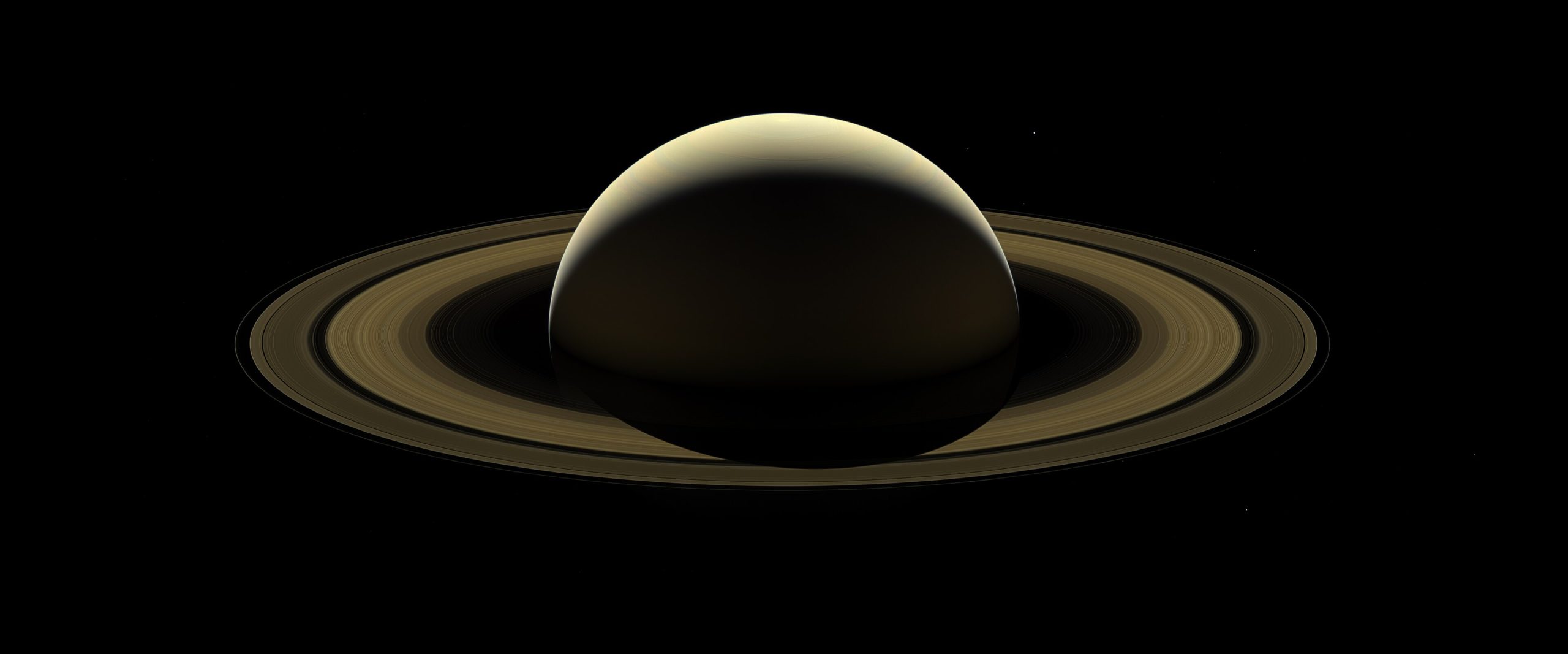
You do not need a telescope on your balcony to enjoy this story, only a sense of wonder at how much remains undiscovered nearby. Saturn is not a distant mystery object; it is a planet humanity has visited, photographed and studied for decades, and still it had more than a hundred moons waiting to be recognised.
How the new moons were confirmed
The ringed planet now has 274 confirmed moons after astronomers added another 128 small worlds to the list. The announcement follows a careful survey carried out with the Canada-France-Hawaii Telescope. Scientists at the University of British Columbia played a central role in identifying and checking the objects. Confirmation meant tracking each object over time until its path around Saturn could be established with confidence. IAU recognition matters because it standardises the catalogue that textbooks and researchers rely upon.
Why such faint moons stayed hidden
Unlike Saturn’s famous icy moons, the latest arrivals are small bodies that had been hiding in the glare and distance. Finding them involves comparing images taken at different times and looking for points that move with the planet. Progress is rarely quick, since faint targets, sprawling orbits and interrupted observing runs all complicate the task. It helps explain the scale of this update: the moons were found gradually, then confirmed as a group.
Readers who want the institutional background can explore the University of British Columbia, whose researchers contributed to the survey work. Their involvement is a reminder that modern astronomy is collaborative, combining telescope time, data analysis and international confirmation processes rather than resting on a single observer or a single night of clear skies.
What the record means for planetary science
The figure comfortably places Saturn first among the planets when it comes to confirmed natural satellites. The swarm may offer clues about collisions and captures in the early history of the outer solar system. Groups with similar orbits are often interpreted as debris, the remains of bigger moons shattered by impacts. The next generation of surveys may well add dozens more, keeping Saturn’s total a moving target for years. We explored a related theme in our technology story on the SpaceX launch over the East Coast, and the contrast is instructive: whether the subject is computing power or celestial mechanics, scale changes the questions researchers have to ask.
Cataloguing a crowded system
The administrative work now begins in earnest, with refined orbits and official designations to follow. That process may sound bureaucratic, but it prevents confusion when different teams publish observations of the same object. Back-garden telescopes will not reveal most of them; their detection depended on sensitive cameras and long, guided exposures. Old datasets often gain new life when better software and better orbit predictions are applied to them. The work shows how discovery has changed, with algorithms and archives standing alongside domes and mirrors.
Why the small moons matter alongside the great ones
For future missions, the famous moons still matter most, but they will now be understood as part of a far larger system. Enceladus, with its spray of icy material, and Titan, with its thick atmosphere, are very different from the newly counted fragments. Formation models must explain the rings, the large moons and the irregular swarms together, not as separate puzzles. Public fascination is not a side effect to apologise for; it is often how support for fundamental research is sustained.
And if all of this leaves you wanting a simpler image to hold on to, try this one on the next clear evening. Find Saturn, steady your view, and remember that the bright point you can see is accompanied by hundreds of companions you cannot, each one following a path worked out by people who refused to stop looking. That gap between what the eye sees and what patient science reveals is, in the end, the real subject of this story, and it is a rather wonderful one.
It is a story to share on a clear night, ideally with Saturn in view, because a planet that looked complete through a small telescope turns out to have been anything but.